
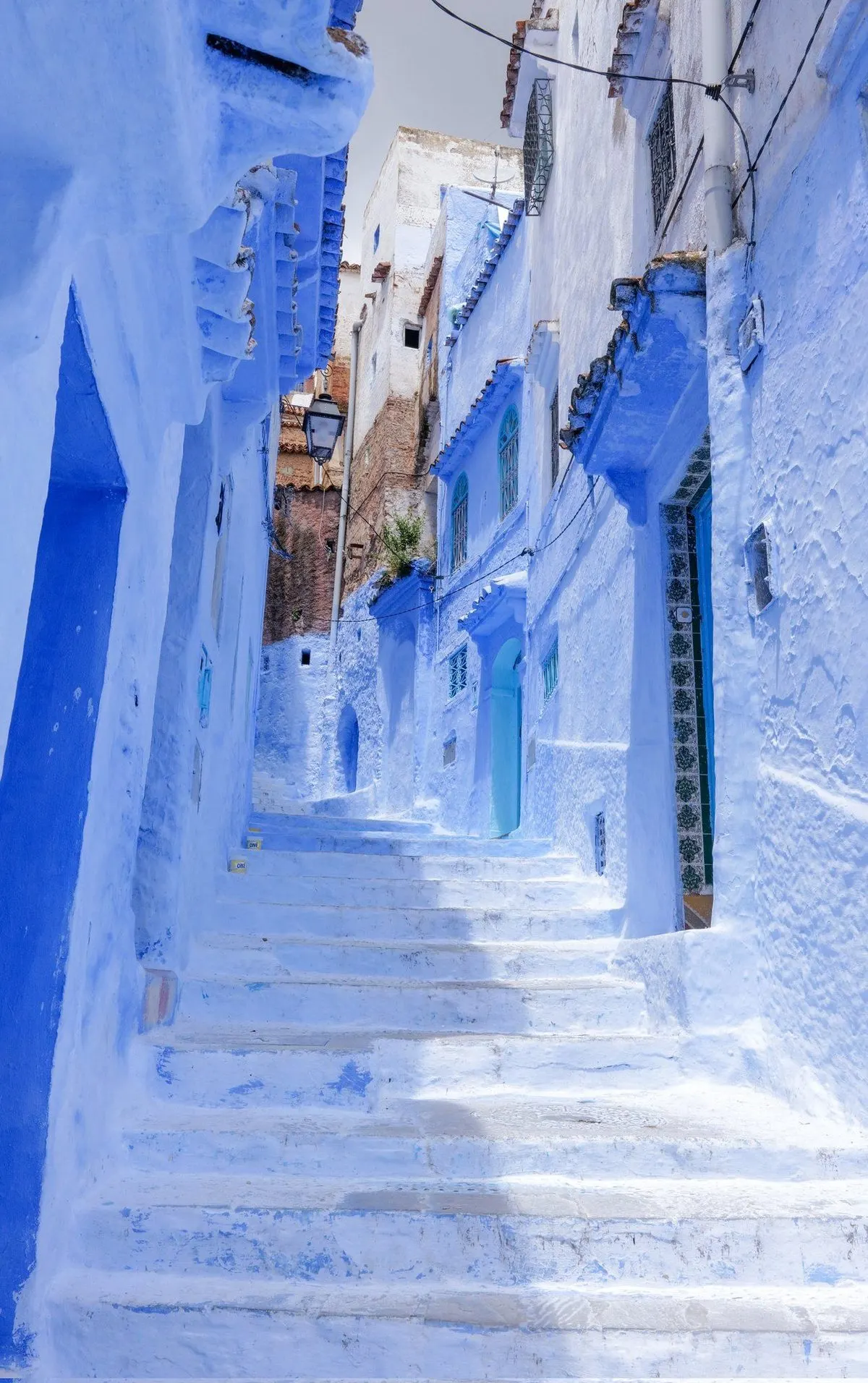
 3 Days / 2 Nights
3-Day Chefchaouen & Fes Tour from Fes
The blue pearl, Roman ruins and imperial Fes — northern Morocco's cultural triangle in 3 days.
from €429View Tour
Chefchaouen, the Blue Pearl, is Morocco's most photographed town. Every wall, staircase, and doorway painted in shades of blue. Here is how to make the most of your visit.
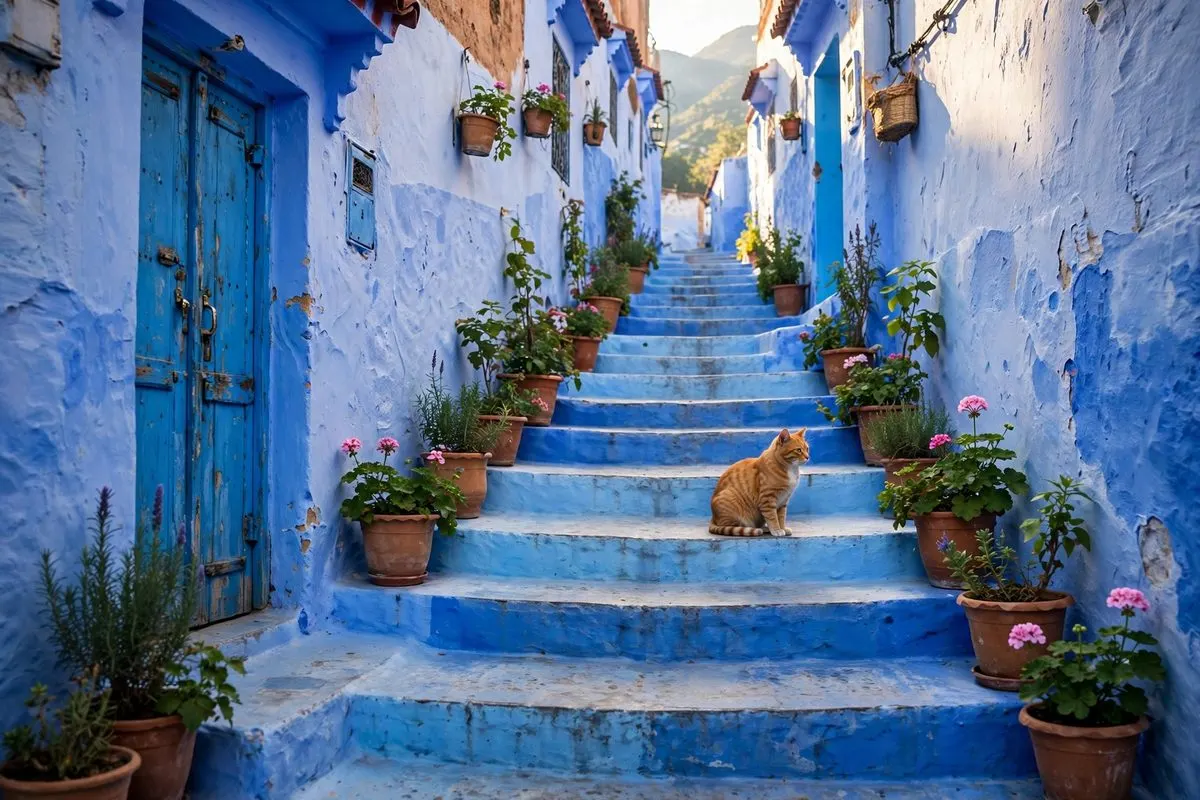
Locals say blue keeps mosquitoes away; others say it represents the sky. The Jewish community who settled here in the 1930s started the tradition. Morning light is the most magical.
Chefchaouen is 2 hours from Fes. Our Chefchaouen day trip from Fes is the easiest option, door-to-door with a local guide.
Pair Chefchaouen with our Fes to Marrakech desert tour, blue city to orange dunes in one trip.
Give the blue city at least a full day, and sleep there if you can: the magic hours are early morning and just before sunset, when the day-trip crowds have gone and the lanes turn violet. Start at Ras el-Maa waterfall where local life washes, dries and socialises, then lose yourself uphill — the blue deepens the higher you climb. The Spanish Mosque on the hill opposite gives you the postcard view over the whole town at golden hour.
Chefchaouen pairs naturally with Tangier (2.5 hours), Tetouan, or as the middle chapter between Fes and the north coast. Because it sits in the Rif Mountains, evenings cool down fast even in summer — bring a layer. And buy the woven blankets and natural pigments the town is known for directly from the small workshops in the upper medina; prices are fair and the makers are usually the sellers.
Ask five locals and you will hear five explanations: Jewish refugees painting the town in the 1930s, blue as a spiritual colour, blue to repel mosquitoes, blue to keep houses cool, blue for the sky and heaven. Historians lean toward the refugee tradition growing into civic pride; whatever the origin, the town now repaints communally and the colour has become identity. It is also, quietly, a painter’s economy — the pigment shops in the medina sell the same powders used on the walls.
Practical notes: the medina is steep and stepped, so bring shoes with grip; photography is welcome but ask before photographing people, especially the older residents who are understandably tired of lenses; and the light for the famous blue lanes is best before 10am. Combine Chefchaouen with Tetouan’s UNESCO medina or the Akchour waterfalls if you have a second day in the Rif.
How many days do you need in Chefchaouen? One full day covers the medina, the kasbah and the Spanish Mosque viewpoint. Two days lets you add the Akchour waterfalls or a slower, crowd-free morning in the blue lanes.
What is the best time of day for photos? Before 10am, when the lanes are empty and the blue is deepest, and again in the hour before sunset when the town turns violet-gold.
How do you get to Chefchaouen? By road: about 2.5 hours from Tangier, 4 hours from Fes. Most travellers visit on a tour between the two cities or as a day trip from Tangier.
Is Chefchaouen safe and easy to explore alone? Yes — it is one of Morocco’s calmest medinas, compact and largely pedestrian, with far less hustle than Fes or Marrakech. Normal awareness applies, and locals are famously relaxed with wandering photographers.
Questions about this route? Message us on WhatsApp — a local guide, not a call centre, will answer.
3 Days / 2 Nights
The blue pearl, Roman ruins and imperial Fes — northern Morocco's cultural triangle in 3 days.
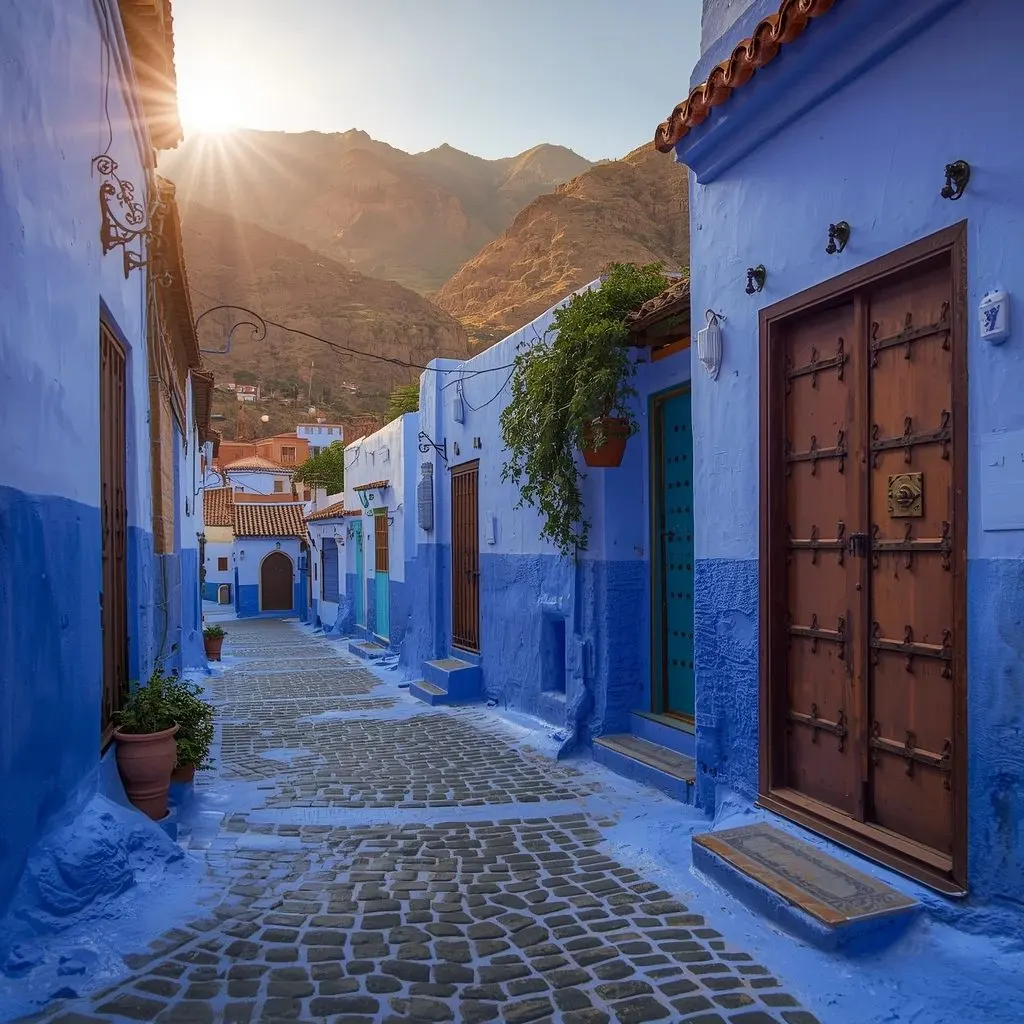 Full Day (10h)
The blue city in a day: Tangier to Chefchaouen and back with time to wander.